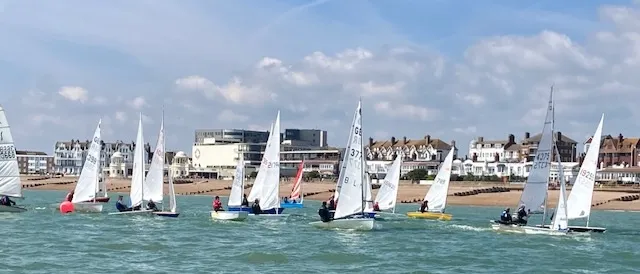
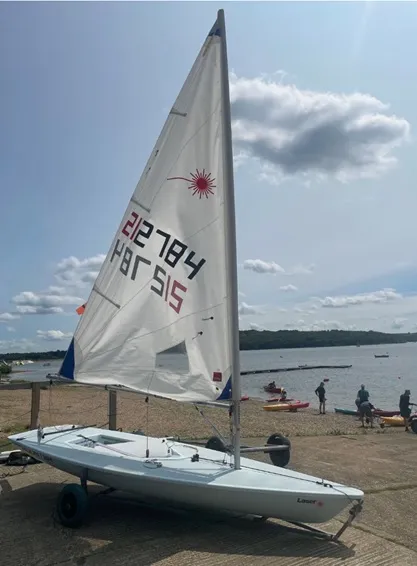

LASER (otherwise and more properly ILCA)
The Laser is perhaps the “default” single hander. It is numerous and widespread, nationally and throughout the world (including Mediterranean sailing holiday bases and the Olympic Games!). So common that it is easy to buy, easy to sell, and also reasonably easy to sail. There are three rigs, interchangeable without any alteration to the boat, each with its own handicap rating:-
Full Rig (ILCA 7) best suited to bigger people.
Radial Rig (ILCA 6) for people who are not so big.
4.7 Rig (ILCA 4) mainly aimed at youth sailors.
Full and Radial rig boats are in our Fast Handicap fleet, the 4.7 rig is in the Slow Handicap fleet. Lasers are straightforward to rig and look after, and tough enough to withstand our beach. Although they are fairly easily handled and fun to sail, you will capsize, and if you want to race more keenly you will need a lot of physical effort when it blows. There is a lot of knowledge and experience of Lasers in the Club.
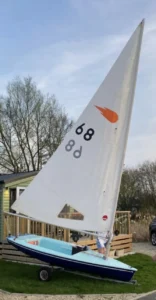
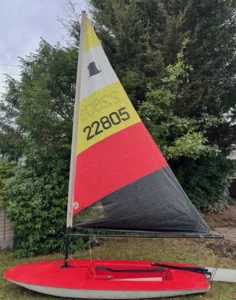
COMET
A smaller single-hander than the Laser, it gives a gentler ride and is favoured by those who are that way inclined! Not as ubiquitous as the Laser, so not so easy to buy. There are a number of different sail types, but they have the same handicap rating, all in our Slow Handicap fleet.
They are easy to sail, not so capsizeable as the Laser, and equally simple to rig and maintain, and equally tough. You can have the choice of a centre mainsheet or aft mainsheet. Although smaller than the Laser it is quite a good weight carrier so you don’t have to be a small sailor!
Neil Smith is the one who knows all the best tips for Comet sailing.
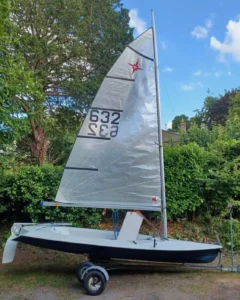
SUPERNOVA
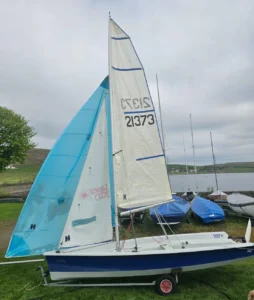
Although there is only one in the Club at the moment, it is worth considering if you are quite big and don’t feel agile enough for a Laser. There is more room and the boom is higher. Unlike the other two with unstayed masts, it has shrouds and forestay. It has an unusual “sugar-scoop” stern, but that’s no problem. It is a strong and popular class nationally, but again not as commonly available as the Laser. Tony Witham is the local expert.
TOPPERS and TOPAZs
Mainly aimed at young people, these can be (and are) sailed by not-so-big adults. Although they are fun in a blow, they are really too small for most adults. Go for a Comet.
2000
(Yes, they used to be part of the Laser stable but for may years now they have been made and sold by RS Sailing. They are not Laser 2000s!).
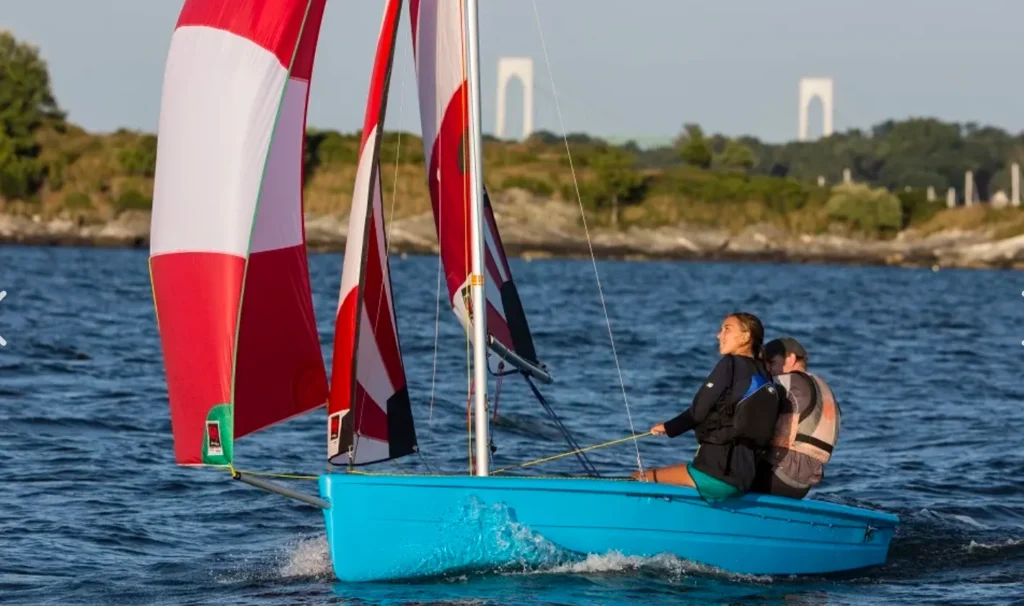
Good training boats of course, and properly set up and maintained they are good boats for all levels of racing, especially with the asymmetric spinnaker. They are sailed and raced successfully at many clubs and open events by all ages and sizes of people. They are heavy, and therefore basically stable, and also therefore hard work on our beach, as you probably already know!
HARTLEY 12.2
These are our smaller club training and youth double-handers. Fairly tough, heavy and stable, they are widely used for training, but unlike the 2000 they do not have much of a following outside the training scene. However they do have options to be set up much better as a fun sailing boat, with asymmetric (or conventional) spinnaker and all the rig adjustment goodies.
MIRACLE
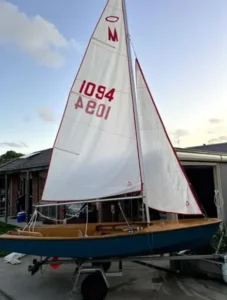
There is a long history of Miracle sailing at the club. A similar size to the Hartley 12.2, it’s fairly small (12’6”) and gentle, but good for two adults, with a conventional spinnaker and very nice to sail. You can fit kids in them as well! Most of the them are wooden, so maintenance may be an issue, but there are grp ones as well. They mostly have an aft mainsheet, but can have a centre mainsheet if preferred. They are quite widespread, and do come up for sale regularly. They are surprisingly tough, and cope well with our beach, being a lot lighter than most. There is a lot of knowledge and experience at the Club of these boats.
BIGGER AND FASTER?
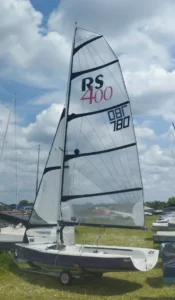
RS200s and RS400s are good steps up for more excitement – and more swimming! They also need more skill and commitment by regular helms and crews. We have and have had several of both at the Club, and there are several people who know about them.
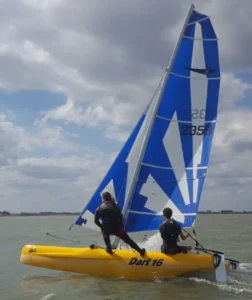
Although there are different cats to be seen (Dart 15, Dart 16 and Dart 18), it’s fair to say that the Dart16 covers all the bases. With various combinations of crews and sail plans (all with different handicap ratings) there is a Dart 16 for almost every occasion. A fast and exciting ride when it blows, slow and ponderous when it doesn’t. Launching and landing on our beach is no problem if you do it right. Just make sure you get trained on righting them after a capsize! There is plenty of expertise and experience in the Club, so welcome to the dark side!
There are so many different types and classes that it must be confusing for the newcomer. Every class and type has its own enthusiastic followers. You should consider what you yourself want to do – how keen a racer you might – or might not – want to be. There is some relationship between size of boat and size of sailor, especially in single-handers. Some boats need more physical input than others, and some boats are more demanding of skill than others. Some are exciting, some can be just tedious! Seek advice from regular sailors here at the club.
Beware the seller who says “ideal for beginners!”
| Cookie | Duration | Description |
|---|---|---|
| cookielawinfo-checkbox-analytics | 11 months | This cookie is set by GDPR Cookie Consent plugin. The cookie is used to store the user consent for the cookies in the category "Analytics". |
| cookielawinfo-checkbox-functional | 11 months | The cookie is set by GDPR cookie consent to record the user consent for the cookies in the category "Functional". |
| cookielawinfo-checkbox-necessary | 11 months | This cookie is set by GDPR Cookie Consent plugin. The cookies is used to store the user consent for the cookies in the category "Necessary". |
| cookielawinfo-checkbox-others | 11 months | This cookie is set by GDPR Cookie Consent plugin. The cookie is used to store the user consent for the cookies in the category "Other. |
| cookielawinfo-checkbox-performance | 11 months | This cookie is set by GDPR Cookie Consent plugin. The cookie is used to store the user consent for the cookies in the category "Performance". |
| viewed_cookie_policy | 11 months | The cookie is set by the GDPR Cookie Consent plugin and is used to store whether or not user has consented to the use of cookies. It does not store any personal data. |